How to Promote YouTube Shorts and Get More Views | RemotionAI Blog
how to promote youtube shorts · youtube shorts promotion · youtube shorts tips · shorts algorithm guide · grow youtube shorts
Learn how to promote YouTube Shorts with proven organic, cross-platform and paid tactics, posting cadence, and KPIs to grow views fast.
You publish a Short you're proud of, watch the first views arrive, and then the graph flattens. A few people comment, but subscribers don't move. Sharing the same clip everywhere brings traffic, yet YouTube still doesn't seem to distribute it further. That's the frustrating part of learning how to promote YouTube Shorts: publishing creates an opportunity, not momentum.
The practical shift is to treat promotion as a retention system. Your hook earns the first stop, the edit earns continued viewing, and YouTube Studio tells you which decision worked. The tactics below focus on those signals, then add a sustainable posting rhythm, selective cross-promotion, and a first-24-hour review loop.
Why Most YouTube Shorts Stall After Upload
A creator can make a useful, well-edited Short and still lose the audience before the idea begins. The opening frame may show a logo, the spoken introduction may take too long, or the viewer may not understand the payoff quickly enough. In the Shorts feed, those small delays matter because viewers can swipe instantly.
Shorts now operate at enormous scale. Industry reporting says Shorts average over 200 billion daily views globally and have reached 2 billion monthly active users, while YouTube's own milestone, highlighted in 2022, cited 30 billion daily views and 1.5 billion logged-in users (Hootsuite's YouTube statistics). That reach is valuable, but it also means a “good” video competes inside a crowded discovery surface.
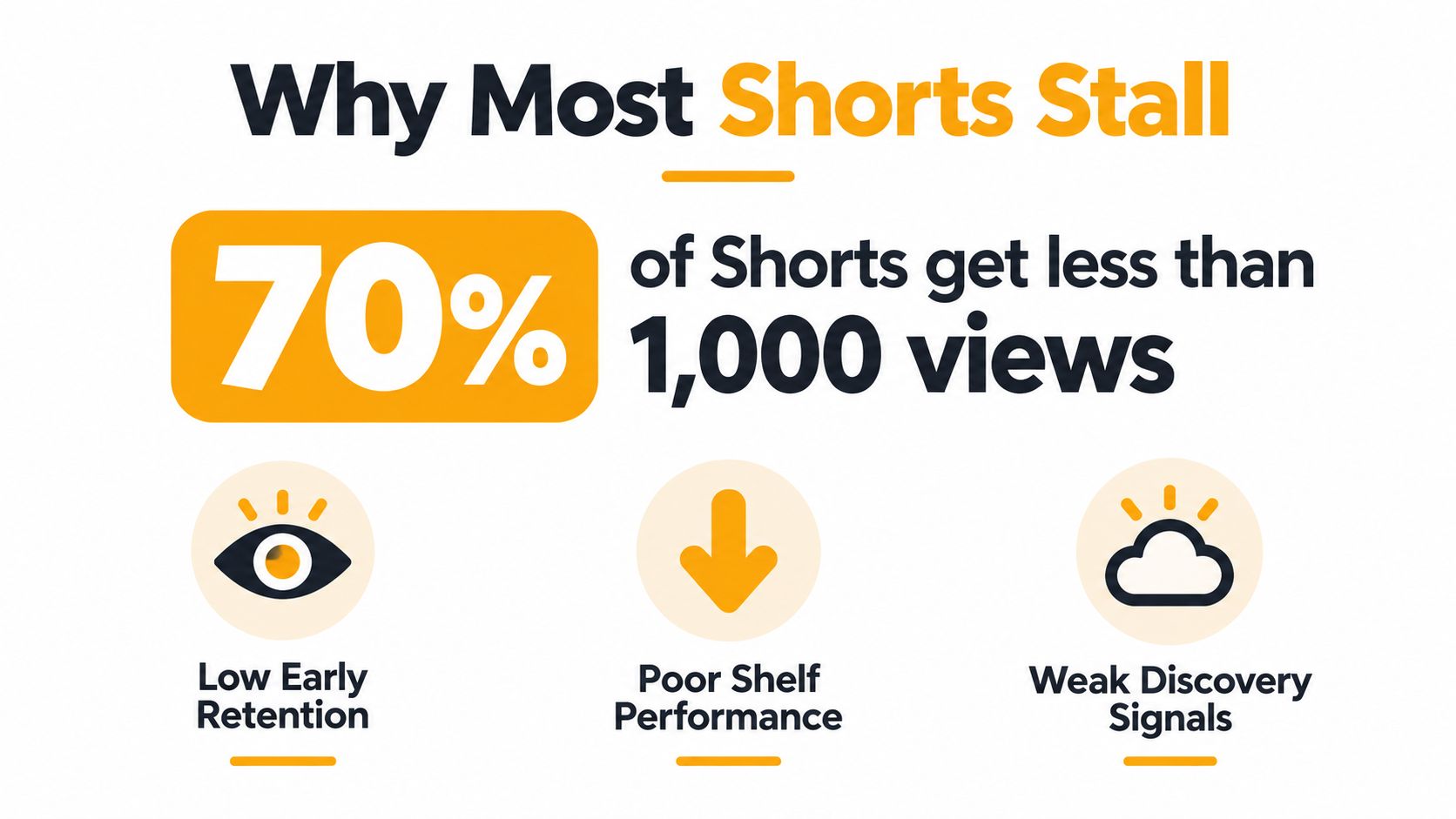
The answer isn't chasing a magic hashtag. Promotion means creating a useful feedback loop:
- Win attention immediately: Show the problem, result, or surprising visual before background context.
- Earn watch time: Remove pauses, repeated explanations, and visual dead spots.
- Learn from distribution: Compare retention and engaged viewing, not raw views alone.
- Amplify selectively: Send the Short to people who are likely to watch, respond, or continue into your channel.
If your workflow includes paid campaigns or several channels, connect YouTube to AdManage.ai to keep campaign activity closer to the reporting process. The tool matters less than the operating principle. Every upload should answer one question about your audience, then give you evidence for the next edit.
Optimize Every Short to Win the First Seconds
YouTube says Shorts ranking uses signals including the percentage of viewers who chose to view, average view duration, and average percentage viewed. It also considers likes and post-watch survey responses when judging whether viewers enjoyed the Short (YouTube's official Shorts ranking guidance).
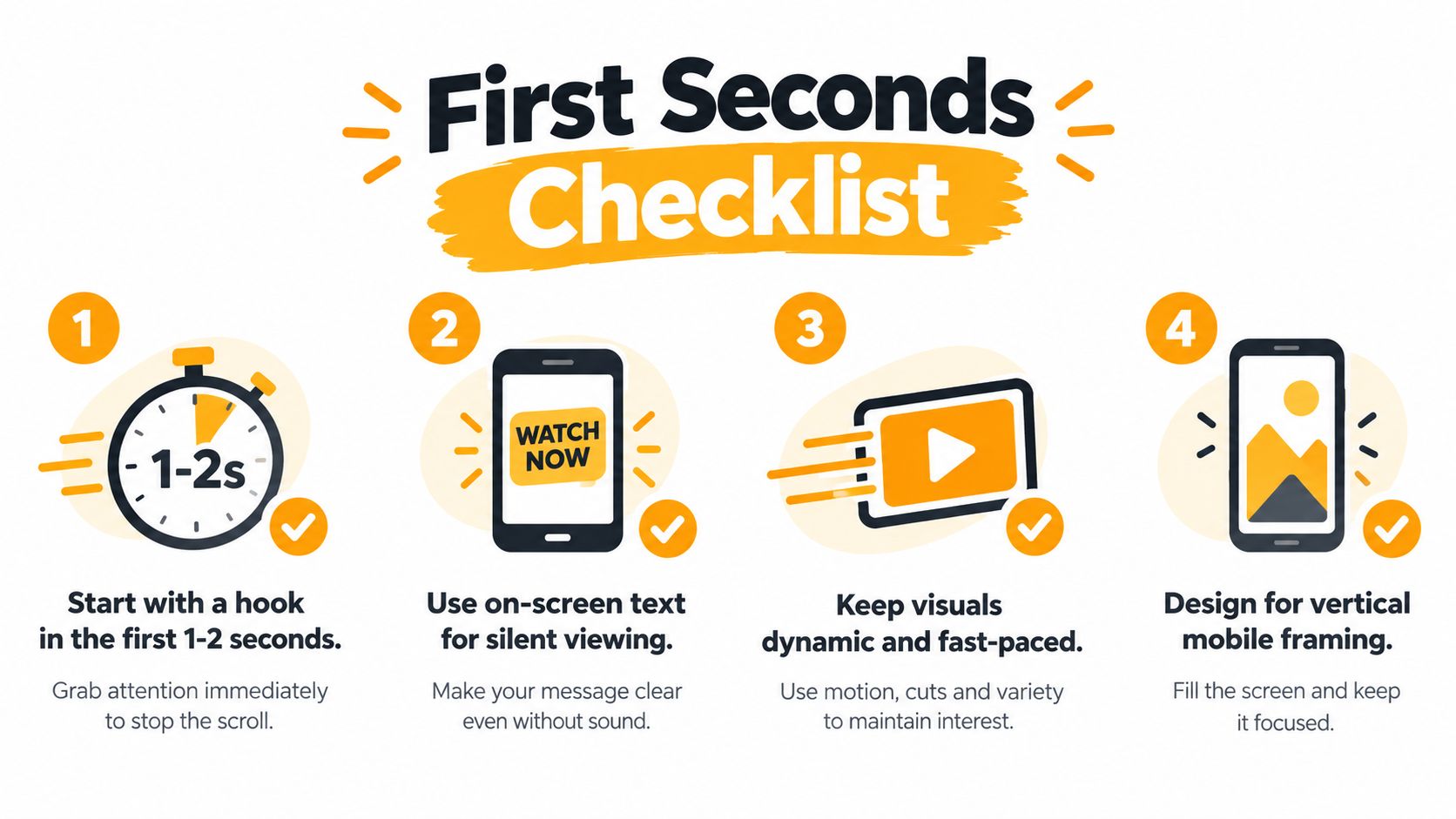
That makes the first seconds a packaging problem, not just a writing problem. Start with a visible change, a direct claim, or a question that names the viewer's tension. “Your Shorts are losing viewers before the lesson starts” is stronger than “Today I want to talk about Shorts.” Put the promised outcome on screen so the idea works even when sound is off.
Industry data reports an average Short length of 33 seconds, with Shorts between 50 and 60 seconds receiving the most views and sub-30-second videos achieving the strongest completion rates (Shorts statistics from Resourcera). Those figures describe different outcomes, not a universal ideal. Use the shortest length that delivers the idea cleanly, and only approach a minute when the story keeps escalating.
A pre-publish check
- Opening frame: Does something change visually before the viewer has time to swipe?
- Spoken line: Does the first sentence state the problem or payoff?
- On-screen text: Can someone follow the point without audio?
- Pacing: Have you removed pauses that don't create suspense or meaning?
- Ending: Does the conclusion answer the opening question or create a natural replay?
- Metadata: Is the title specific, and do the description and hashtags clarify the topic?
Captions, vertical framing, clean audio, and readable text won't rescue a weak idea, but they prevent avoidable friction. For more production detail, use this guide on how to make YouTube Shorts. If your Short ends with a product action, a tutorial on YouTube CTAs for swag managers can help you connect the viewing experience to a clearer next step.
Build a Posting Rhythm That Feeds the Algorithm
Consistency works when it creates learning, not when it produces a pile of nearly identical uploads. A useful rhythm gives you enough publishing opportunities to compare hooks, topics, and formats while leaving time to inspect what viewers did.
One benchmark places the productive range at 2 to 4 Shorts per week, while a large cross-platform benchmark reports average YouTube Shorts engagement around 0.30% (Metricool's Shorts algorithm analysis). The engagement figure is a reminder that reach and interaction aren't automatic. Posting more often won't compensate for weak audience fit or an opening that loses attention.
Use a simple weekly production system:
- Choose a few repeatable pillars. Examples include quick audits, product demonstrations, myths, customer questions, and behind-the-scenes decisions.
- Batch the research, not necessarily the filming. Write several opening lines around one audience problem, then record the versions that sound natural.
- Repurpose with judgment. A strong moment from a long-form video can become a Short, but cut the context aggressively and rebuild the opening for feed viewing.
- Review the result before making the next variation. Change one major variable, such as the first line, visual order, or CTA, so the outcome remains interpretable.
Timing should follow your own audience activity rather than a generic posting chart. You can use Trendy's data on YouTube timing as a planning input, then compare it with the “When your viewers are on YouTube” report in Studio. Treat publishing time as a test variable, not a substitute for a stronger Short.
Cross Promote and Boost Without Hurting Reach
Cross-promotion can introduce a Short to people who already know your topic. It can also send low-intent viewers who tap, watch briefly, and leave. That's why the useful question isn't whether Instagram or TikTok can produce clicks. It's whether the people arriving from those channels are likely to watch and engage with the YouTube version.
A recurring gap in advice about promoting Shorts is this difference between external traffic and qualified attention. Guidance increasingly recommends evaluating retention, engaged views, and interaction rate instead of raw view counts (Buffer's guide to growing YouTube Shorts).
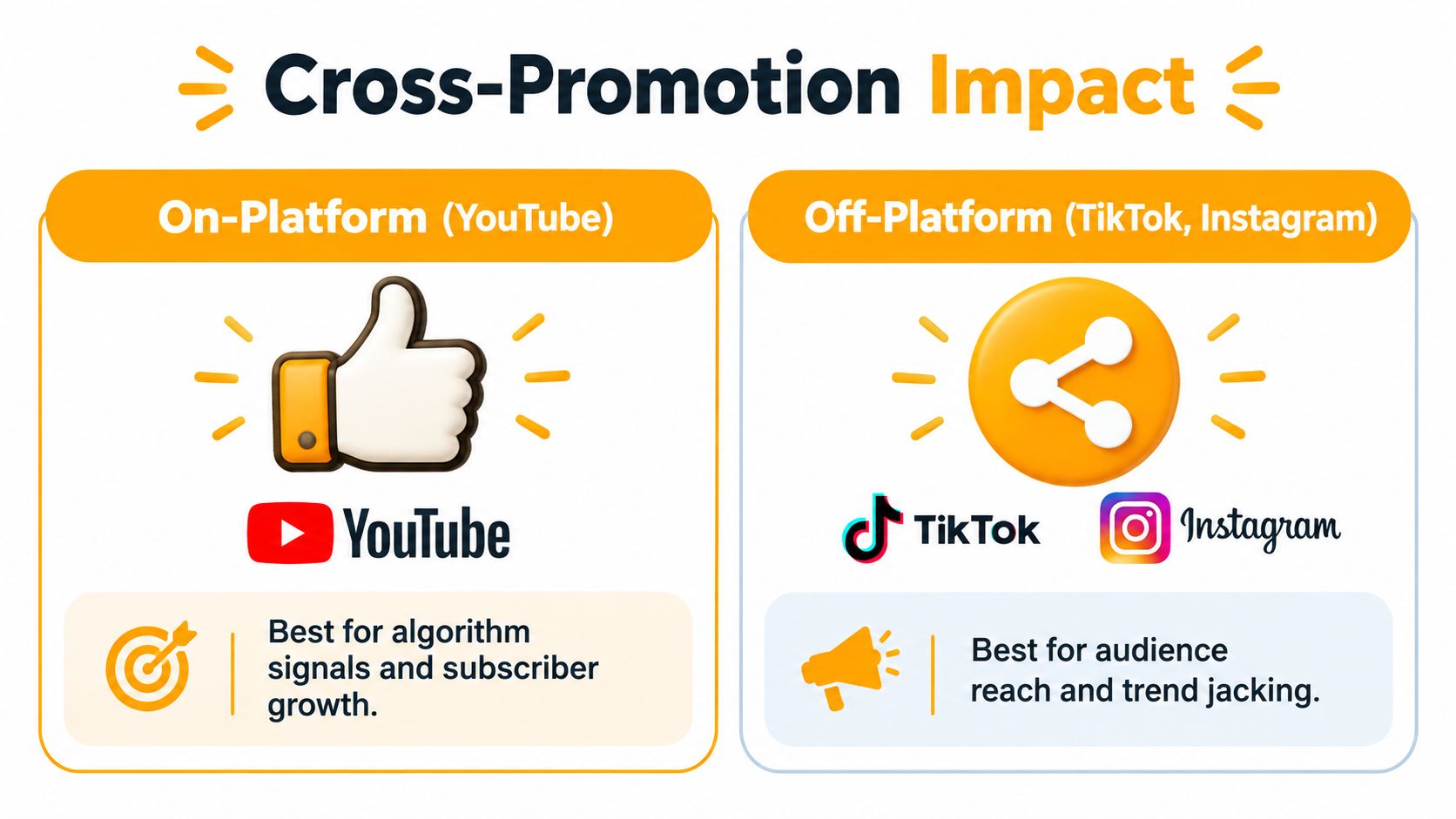
Use each channel for a different job:
| Route | Use it when | Avoid it when |
|---|---|---|
| YouTube Community and related content | The Short naturally leads to another video or discussion | You're adding a CTA that interrupts the payoff |
| Instagram or TikTok teaser | The subject already fits that audience and you can adapt the caption | You're reposting without context or a native opening |
| Creator collaboration | The partner's audience has a genuine overlap with yours | The collaboration is based only on follower size |
| Paid promotion | The Short already holds attention and has a defined business action | You're buying views to compensate for weak retention |
Paid distribution deserves restraint. A boost can create awareness, but paid views alone don't prove that the creative works organically. Test a clear objective, such as a product visit or qualified channel discovery, and judge the campaign by meaningful actions rather than an impressive view counter. For a deeper look at the trade-offs, see paid promotion on YouTube.
Track What Matters and Fix What Drops Off
The first 24 hours should be treated as a diagnostic window. Check YouTube Studio's Viewed vs. Swiped Away report, average percentage viewed, average view duration, and returning viewers. One benchmark recommends targeting above 70% Viewed as a strong early signal and aiming for above 90% average percentage viewed (ShortGenius Shorts best practices).
| KPI | What It Tells You | Healthy Benchmark |
|---|---|---|
| Viewed vs. Swiped Away | Whether the opening earns a stop | Above 70% Viewed as an early target |
| Average percentage viewed | How much of the Short the audience consumes | Above 90% as an ambitious target |
| Average view duration | The actual time viewers spend watching | Compare with the Short's length and earlier uploads |
| Returning viewers | Whether the video creates an ongoing channel relationship | Look for movement beyond one-off reach |
| Shares and comments | Whether the idea creates active response | Compare by format, not only by total views |
A sharp drop in the first moments points to the hook, framing, or first spoken line. A later dip usually identifies a slow explanation, an unclear transition, or a CTA that arrives before the viewer receives enough value. Edit the timestamp where people leave instead of rewriting the entire concept blindly.
Practical rule: Treat a retention graph as an edit map. The biggest drop is usually your highest-value place to shorten, reorder, or clarify.
Traffic sources add context. If external viewers behave differently from Shorts-feed viewers, don't assume the promotion failed. Ask whether the external audience received the right promise, then adjust the teaser or landing context. A repeatable video feedback loop turns each upload into a controlled improvement rather than a verdict on your creative ability.
Your Next Week Promotion Plan That Actually Works
Start the week by selecting one audience problem and writing several hook variations. Produce 2 to 4 Shorts, keep the format recognizable, and change one meaningful element at a time. Publish when your viewers are active, then inspect the first-day Viewed vs. Swiped Away rate, retention curve, traffic sources, and returning-viewer behavior.
Share the strongest Short to one relevant external audience, but don't flood every channel with the same unedited clip. Consider paid promotion only after the video demonstrates retention and you know what business action you want from the audience. Ignore raw views when they conflict with watch quality, and don't keep repeating a format whose opening consistently loses viewers.
Promotion isn't a one-time push. It's a weekly process of hook, publish, observe, edit, and repeat. The creators who improve aren't guessing what went viral. They're finding the exact moment that failed and making the next Short easier to watch.
RemotionAI turns plain-language ideas into platform-ready vertical videos with generated visuals, voiceovers, synchronized audio, and word-by-word captions for YouTube Shorts. Use RemotionAI to produce hook variations faster, preview them, and refine the version you'll measure in your next 24-hour promotion loop.